
Company
How Cal.com Rebuilt AppSec After Going Closed Source
How Cal.com consolidated noisy security tooling into one continuous, context-aware pull request security program with Gecko.
Gecko Security
 Gecko Security10 min read
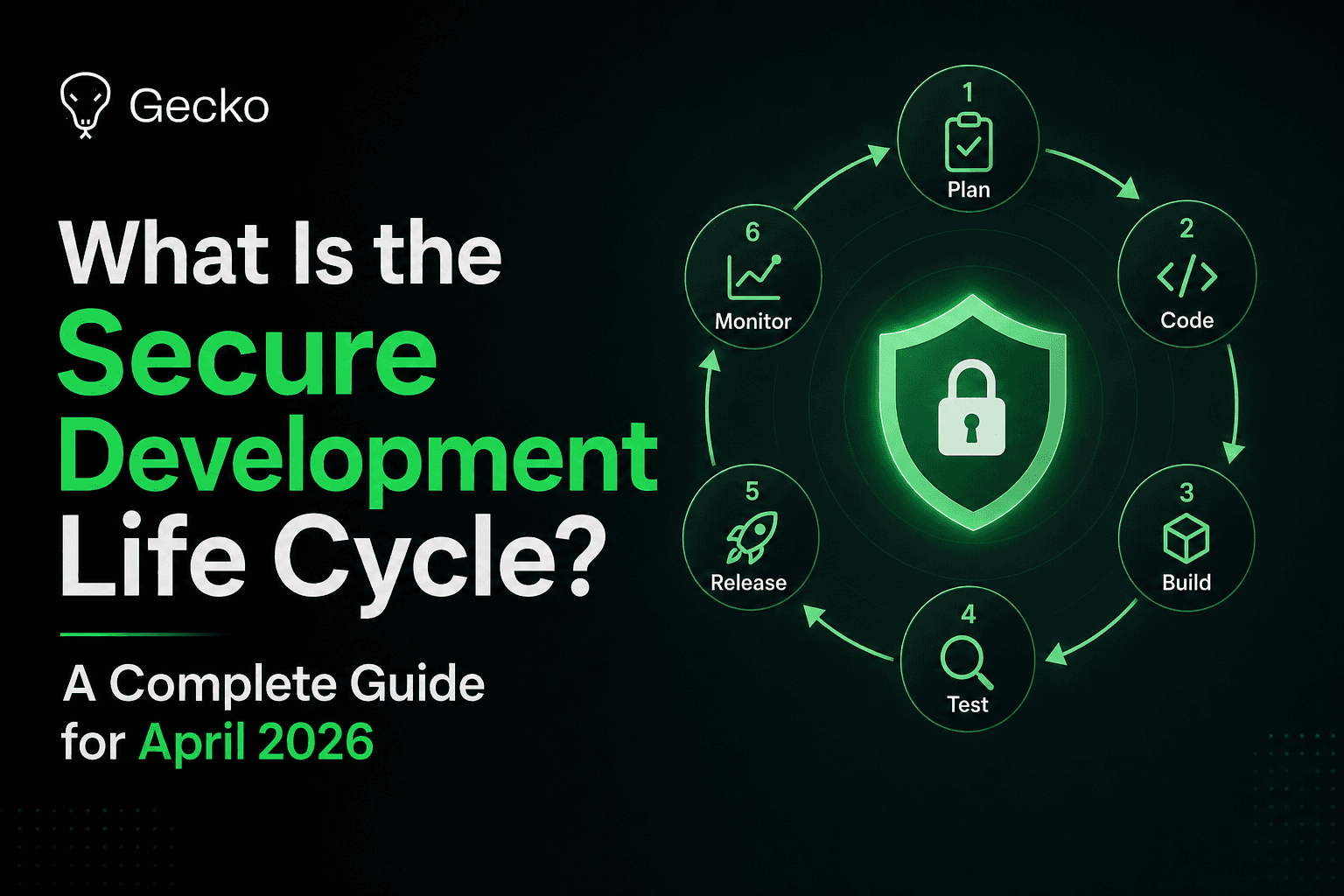
When you run static analysis on every commit and gate releases on clean security scans, you'd expect fewer vulnerabilities in production. But OWASP's 2025 data found 100% of applications had some form of broken access control, which tells you something specific about the secure development life cycle as it's currently practiced. The flaws getting through aren't syntax errors your SAST tools were designed to catch: they're semantic gaps in authorization logic that only appear when you trace the full flow across services and roles.
TLDR:
The secure development life cycle (SDLC) is a framework that weaves security into every phase of software development, from initial planning through deployment and maintenance. It goes by several names: secure SDLC, SSDLC, or SDL. The underlying idea stays consistent across all of them: security is not a final checkpoint. It's a continuous thread running through requirements, design, code, and testing.
Traditional development treats security as something you bolt on at the end, usually a penetration test before launch or a compliance audit after. Static code analysis during development helps catch flaws earlier. The secure SDLC flips that entirely. Security obligations exist at every phase, from planning through deployment.
Why does this matter right now? OWASP's 2025 testing found that 100% of applications had some form of broken access control, keeping it at the top of the vulnerability category list. That's not a fluke. It reflects what happens when teams ship features without verifying authorization logic. Security added late rarely catches that kind of flaw, and finding it post-deployment costs far more than catching it during development.
Each phase of the secure SDLC carries distinct security responsibilities. Skip one, and the costs compound at every stage after it.
| Phase | Security Activities |
|---|---|
| Requirements | Define security requirements, map compliance needs, scope threat surface |
| Design | Threat modeling, attack surface review, security architecture decisions |
| Implementation | Secure coding standards, static analysis, peer code review |
| Testing | Penetration testing, vulnerability scanning, runtime analysis |
| Deployment | Secure configuration, hardening, secrets management |
| Maintenance | Patch management, continuous monitoring, incident response |
The timing principle is direct: a flaw caught at design takes hours to fix. Found post-release, it can mean weeks of rework, regulatory scrutiny, and reputational fallout. The further a vulnerability travels through the pipeline, the more code gets built on top of it, and the more expensive untangling becomes.
NIST SP 800-218, the Secure Software Development Framework (SSDF), is the U.S. government's official guidance for secure software development. It organizes practices into four groups:
Microsoft's Security Development Lifecycle traces back to a single internal memo. In January 2002, Bill Gates sent his "Trustworthy Computing" message to Microsoft's entire engineering organization, shifting the company's priority from features to security. That memo triggered a company-wide security push that eventually became the SDL, a structured approach to reducing vulnerabilities before software ships.
The SDL introduced several practices that are now standard across the industry: mandatory security training for engineers, threat modeling during design, required use of approved static analysis tools, and a final security review before any release. These weren't suggestions. Microsoft made them requirements across its product teams.
What made the SDL stick beyond Microsoft's walls is its adaptability. The core practices translate regardless of your stack, team size, or whether you use a single Microsoft product. Many organizations run SDL-aligned processes without ever calling it that.
The SDL's most lasting contribution is probably normalizing threat modeling as a design-phase activity, not an afterthought. Identifying where trust boundaries exist, how data moves, and where access controls need to live before a line of code is written catches an entirely different class of problem than post-implementation scanning.
OWASP contributes two frameworks worth knowing: SAMM (Software Assurance Maturity Model) and ASVS (Application Security Verification Standard).
SAMM takes a risk-based approach, organizing security practices across five business functions: governance, design, implementation, verification, and operations. Each function includes maturity levels, so teams can benchmark where they stand and build incrementally instead of attempting an overnight overhaul. ASVS is more prescriptive. It defines specific verification requirements mapped to vulnerability categories from the OWASP Top 10, giving teams a concrete definition of what "secure enough" actually looks like in practice.
Both frameworks are vendor-neutral and community-driven. No licensing fees, no vendor lock-in, and no single company controlling the direction. They complement SDL and SSDF well: where those define process structure, SAMM and ASVS supply specific security requirements to measure against.
Agile teams ship in two-week sprints. Traditional security gates, designed for waterfall, weren't built for that rhythm. Waiting until a release candidate exists to run security reviews means every vulnerability found requires going back through code that's already been reviewed, merged, and built upon.
DevSecOps moves security left by embedding it directly into the CI/CD pipeline. Automated static analysis runs on every pull request. Secrets scanning catches credentials before they reach a repository. Dependency checks flag known vulnerabilities at build time, before deployment. The goal is catching issues at the exact moment they're cheapest to fix.
Human review still has a place. Threat modeling fits naturally at sprint planning when new features are scoped. Security acceptance criteria belong alongside functional ones in user stories. The teams that get this right treat security as a definition of done, not a separate lane.
Threat modeling maps how an attacker might reach critical assets before a system is built. Done at design time, it catches structural flaws early, when changing course costs almost nothing.
Three common approaches exist for structuring this work:
One real limitation: these frameworks surface technical attack paths well, but struggle with business logic flaws. A missing authorization check never appears in a data flow diagram. It requires knowing what the code was supposed to enforce, which is a semantic question, not a structural one.
Secure coding standards give developers concrete rules at the point where vulnerabilities are actually introduced. CERT publishes language-specific guidelines for C, C++, Java, and others, focusing on the dangerous patterns most likely to cause real exploits. OWASP's Secure Coding Practices Quick Reference covers input validation, output encoding, authentication handling, and error management in a format developers can apply immediately.
The core practices boil down to a short list:
The real challenge is consistency. Individual developers follow standards when they know them. The gap appears when teams grow, new engineers onboard without context, or AI-generated code gets merged without review. Standards only work if they're enforced automatically. Documentation alone won't cut it.
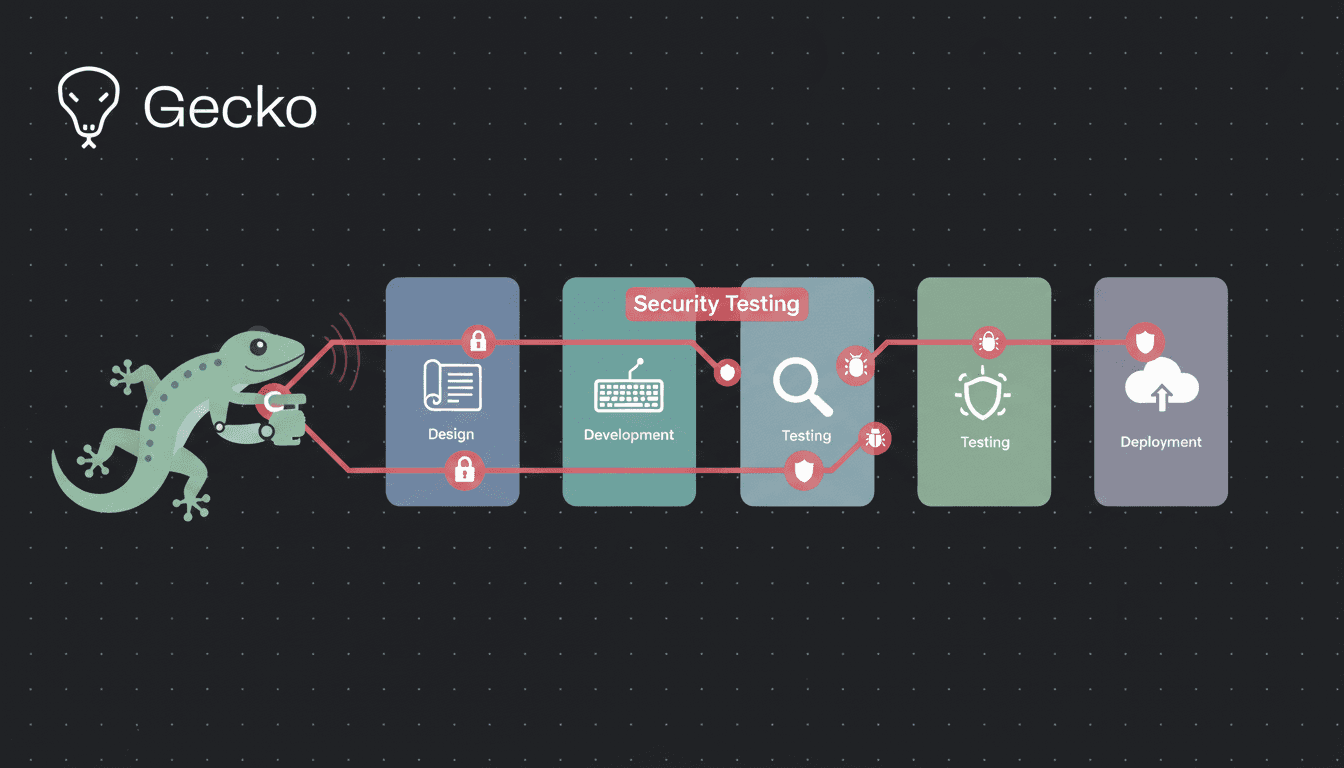
Security testing works best when multiple methods run at different stages, each catching what others miss.
The OWASP Top 10 tells a clear story about which vulnerability classes have been solved and which haven't. Injection attacks dropped from the top spot in 2017 to fifth by 2025. Parameterized queries, ORMs, and secure-by-default frameworks made SQL injection structurally harder to introduce. The category got contained.
Broken access control moved in the opposite direction, climbing from fifth to first. Authorization logic can't be parameterized away. Fixing it requires knowing what each user should and shouldn't be allowed to do, which is context the code itself doesn't always make explicit.
Beyond application-layer flaws, the development pipeline itself has become an attack surface:
These aren't syntax errors. They're logic and configuration gaps that pattern-matching tools weren't designed to catch.
Barriers to secure SDLC adoption rarely come from missing tools. They come from organizational friction: developers who see security reviews as blockers, security teams siloed from engineering, and leadership choosing shipping speed over risk reduction.
A few approaches consistently move the needle:
The cultural shift takes longer than any tooling change. Security becomes everyone's responsibility only when security findings block shipping the same way a failing unit test does.
Business logic vulnerabilities sit in a different category from memory corruption bugs or injection flaws. There's no malformed input, no obvious payload, no single line that looks wrong in isolation. The flaw lives in the relationship between components, in what the code allows that it shouldn't.
Standard static analysis tools parse files and flag known-bad patterns. That works for SQL injection. It fails for logic errors because the vulnerability only appears when you trace the full flow across services, roles, and state transitions.
AI-powered security tools are changing what's possible inside the SDLC. Instead of relying purely on rule-based scanners that flag syntax patterns, newer AI-powered approaches build semantic models of your codebase, tracing data flows and trust boundaries across services to catch broken access control, IDOR, and authorization bypass issues that traditional tools miss entirely.
The strongest implementations follow how a skilled penetration tester actually works: threat modeling first, then vulnerability analysis, then automated proof-of-concept generation to validate each finding before it reaches production.
The difference between a secure development life cycle on paper and one that actually works comes down to whether security blocks shipping the same way a failing test does. You need tools that catch business logic flaws during code review, not three sprints later during penetration testing. If you want to see how semantic vulnerability detection fits into your current process, grab 30 minutes with our team. Start with automated checks that run silent and catch what your SAST misses, then build the culture around what the tooling makes visible.
The secure SDLC builds security into every development phase from requirements through maintenance, while traditional SDLC treats security as a final checkpoint before launch. In secure SDLC, each phase carries specific security obligations: threat modeling during design, secure coding during implementation, and continuous monitoring post-deployment, making vulnerabilities far cheaper to fix.
No. Pattern-matching SAST tools scan for syntax problems like SQL injection but miss authorization logic flaws that span multiple services. Broken access control appears in the relationship between components: a missing check in one service, improper validation in another. This requires semantic understanding of how the code should behave beyond its structural patterns.
Agile secure SDLC embeds security directly into sprint cycles through automated scanning on every pull request, security acceptance criteria in user stories, and threat modeling during sprint planning. Waterfall secure SDLC uses phase gates with security reviews between stages, but this creates bottlenecks when vulnerabilities require going back through already-merged code.
Most teams can automate basic security gates (SAST, secrets scanning, dependency checks) in their CI/CD pipeline within a few weeks. Full organizational adoption including threat modeling practices, security training, and cultural changes typically takes 6-12 months depending on team size and existing security maturity.
SQL injection got solved through structural defenses: parameterized queries and ORMs that separate code from data. Authorization logic can't be parameterized away because each application defines different rules for who should access what. Fixing broken access control requires knowing the intended security policy first, which is context-specific to your application's business logic.
Gecko Security
The latest news, technologies, and resources from our team.
How Cal.com consolidated noisy security tooling into one continuous, context-aware pull request security program with Gecko.
Gecko Security
See what actually changed in the OWASP Top 10 for 2026, from merged SSRF and XXE categories to new supply chain risks and scanner coverage gaps.

Jeevan Jutla
Gecko Security uncovered CVE-2026-21894 in August 2026, an n8n authorization bypass with CVSS 8.8. See why static tools missed it and how to remediate it.
Jeevan Jutla
Security misconfiguration is OWASP A05 for a reason. Learn how deployment context determines exploitability and how to fix gaps in August 2026.
Jeevan Jutla
How do modern AppSec vendors actually compare? This July 2026 capability map covers SAST, DAST, SCA, business logic flaws, and cross-service
Gecko Security
Break down your AppSec stack: what SAST, DAST, SCA, IAST, and pen testing each see — and what they miss. Updated July 2026 by Gecko Security.
Gecko Security
Occasional updates, new content, and insights. No spam; unsubscribe anytime.




