
Company
How Cal.com Rebuilt AppSec After Going Closed Source
How Cal.com consolidated noisy security tooling into one continuous, context-aware pull request security program with Gecko.
Gecko Security
 Gecko Security8 min read
The sandbox protecting Claude Code is solid, but when developers ask if Claude Code is secure, they're usually asking the wrong question. The agent's kernel-level isolation stops prompt injection from reaching your filesystem or network. What it doesn't stop is Claude generating code with authorization bypasses and privilege escalation. Those vulnerabilities don't need to break out of a sandbox to cause damage in production.
TLDR:
Claude Code runs inside a sandboxed environment by default, using OS-level isolation primitives instead of software-level guardrails. On macOS, that's Apple's Seatbelt (sandbox-exec). On Linux, bubblewrap handles the same job. Both enforce filesystem and network restrictions at the kernel level, which limits the blast radius if something goes sideways.
The design separates filesystem access from network access in two distinct layers. Claude Code only gets read/write access to directories you explicitly permit, and outbound network calls get restricted to a defined allowlist. If prompt injection occurs and the model tries to exfiltrate credentials or reach a malicious endpoint, the sandbox blocks the attempt before real damage happens. The isolation holds even when the agent itself is compromised.
Anthropic's internal testing found that sandboxing reduced permission prompts by 84% without meaningfully restricting the agent's actual work. Security tightened. Friction dropped. That trade-off is rare.
Two properties make this design worth paying attention to:
The MCP server ecosystem extends Claude Code's capabilities, but every server you install runs as a separate process with the same trust level as any installed software. No automatic vetting. No sandbox by default.
That's a real problem. Astrix Security's research across 5,200+ open-source MCP server implementations found that 48% use insecure credential storage and 53% rely on long-lived static credentials. A compromised server with access to your AWS credentials or database connection strings doesn't need a sophisticated exploit. It just needs to be installed.
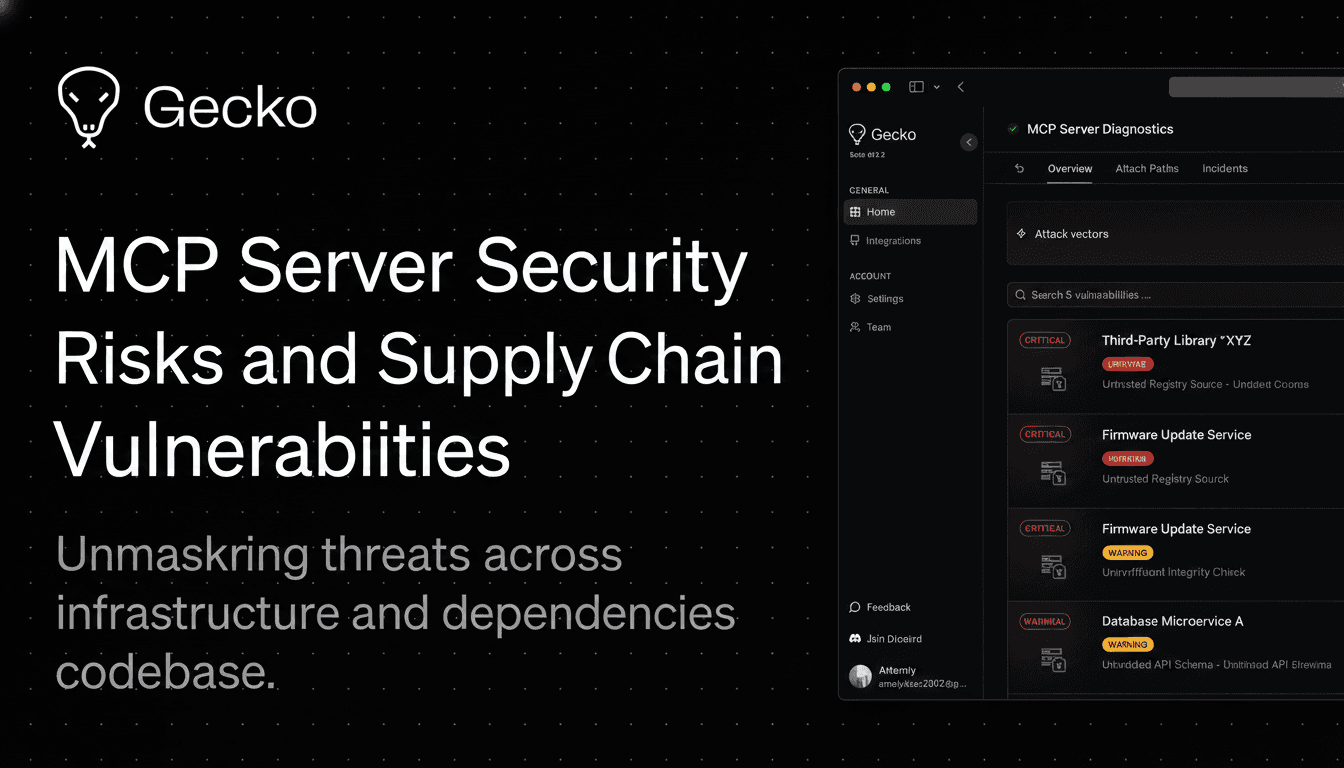
Supply chain risk compounds this. MCP servers pull in their own dependencies, and malicious packages mimicking popular tool names have already surfaced in the ecosystem. Once installed, a rogue server can read files, make network calls, and interact with Claude's context without triggering sandbox warnings.
For enterprise deployments, allowlisting is the right control. Vet sources, audit dependencies before installation, and treat each MCP server like any third-party binary with broad system access. Because that's exactly what it is.
As of May 2026, there are no formally assigned CVEs targeting Claude Code itself. The attack surface, though, is real and worth understanding.
The most documented vulnerability class involves prompt injection via malicious repository content. When Claude Code reads files, documentation, or comments containing adversarial instructions, it can be manipulated into executing unintended commands. Researchers have reproduced this reliably in controlled settings.
Beyond prompt injection, three additional risk areas have been flagged by security researchers:
The absence of CVEs reflects the newness of agentic coding tools as a vulnerability category, not the absence of risk. Traditional CVE tracking was built for software with fixed versions and discrete bugs. Complete security review practices help fill these gaps. Claude Code's risks are often behavioral and context-dependent, which means they fall through the gaps of conventional vulnerability tracking frameworks.
Prompt injection sits at the top of the threat list for AI coding agents, and Claude Code is no exception. The attack works by embedding malicious instructions inside content the agent is expected to read: a README, a code comment, an API response, or even a dependency's documentation.
When Claude Code processes that content, it may interpret the embedded instructions as legitimate commands and act on them accordingly.
There are two variants worth understanding:
The risk scales with autonomy. The more Claude Code can do without human confirmation, the more damaging a successful injection becomes.
An agent with write access to your codebase and the ability to run shell commands does not need much nudging to do real harm.
Anthropic has acknowledged this threat class directly. Claude Code is designed to be skeptical of instructions that arrive from outside the original conversation, but this defense has limits. Sufficiently crafted injections can still blur the line between data and instruction.
| Threat Vector | Specific Risk | Mitigation Strategy |
|---|---|---|
| Prompt Injection (Direct) | Malicious instructions in user inputs bypass system guardrails and trick Claude Code into ignoring safety restrictions or executing unintended commands | Restrict tool permissions using /permissions command to whitelist only necessary bash commands and file paths, require human confirmation for sensitive operations |
| Prompt Injection (Indirect) | Third-party content (READMEs, dependency docs, API responses) contains hidden instructions that Claude Code executes mid-task without user awareness | Audit all third-party content Claude Code reads, limit autonomous multi-step workflows, block write access to sensitive directories without explicit approval |
| MCP Server Supply Chain | 48% of MCP servers use insecure credential storage and 53% rely on static tokens, giving compromised servers access to AWS keys and database credentials without sandbox protection | Allowlist vetted MCP servers only, audit dependencies before installation, prefer self-hosted servers where you control the code, treat each server as untrusted third-party binary |
| AI-Generated Code Flaws | 45% of AI-generated code contains security vulnerabilities including SQL injection, hardcoded credentials, and missing authorization checks, with 2.74x more flaws than human-written code | Review all generated code for authorization logic, scan for hardcoded secrets, validate that permission checks exist at service boundaries, use semantic analysis tools like Gecko to catch business logic gaps |
| Sandbox Escape Risk | Kernel-enforced isolation (Seatbelt, bubblewrap) blocks filesystem and network access outside permitted scope, but configuration errors can weaken boundaries | Define minimal filesystem access scope explicitly, restrict outbound network access in sensitive environments, audit sandbox configuration regularly to prevent scope creep |
| Agentic Scope Creep | Multi-step autonomous tasks drift beyond intended boundaries, accessing files or making network calls outside the original instruction's scope | Limit agent autonomy for sensitive workflows, require human approval for file access outside project directories, monitor network calls for unexpected destinations |
Veracode's 2025 GenAI Code Security Report found that 45% of AI-generated code contains security flaws, and CodeRabbit's analysis of 470 real-world pull requests found AI tools produce 2.74x more vulnerabilities than human-written code.
The most common problems are familiar: SQL injection, cross-site scripting, hardcoded credentials, and missing authorization checks. Not novel threats. The same vulnerability classes that have led security lists for years, now reintroduced at scale by tools developers trust without reviewing output.
CMU research adds a sharper point: only 10% of AI-generated features actually meet security standards. That gap between "it works" and "it's secure" is exactly where attackers operate.
Claude Code offers several configuration levers that security teams should know about before deploying it at scale.
Start by restricting which tools Claude Code can invoke. The /permissions command lets you whitelist specific bash commands and file paths. Running with minimal permissions reduces the blast radius if Claude Code misinterprets a prompt or encounters a malicious instruction.
Every MCP server you connect expands Claude Code's attack surface. Before connecting any third-party MCP server, review its tool definitions for overly broad permissions, and prefer self-hosted servers where you control the code.
Never store API keys or credentials in files Claude Code can read. Use environment variable injection at the process level, and audit .env files regularly to confirm nothing sensitive has been written to disk by an automated workflow.
In sensitive environments, restrict outbound network access entirely. Claude Code's ability to make HTTP requests is useful, but it also means a prompt injection could exfiltrate data if network egress is unrestricted.
Faster code shipping with Claude Code doesn't change what breaks in production. Authorization bypasses and privilege escalation on API endpoints are exactly the vulnerabilities AI-generated code introduces, and they're exactly what pattern-based SAST tools miss.
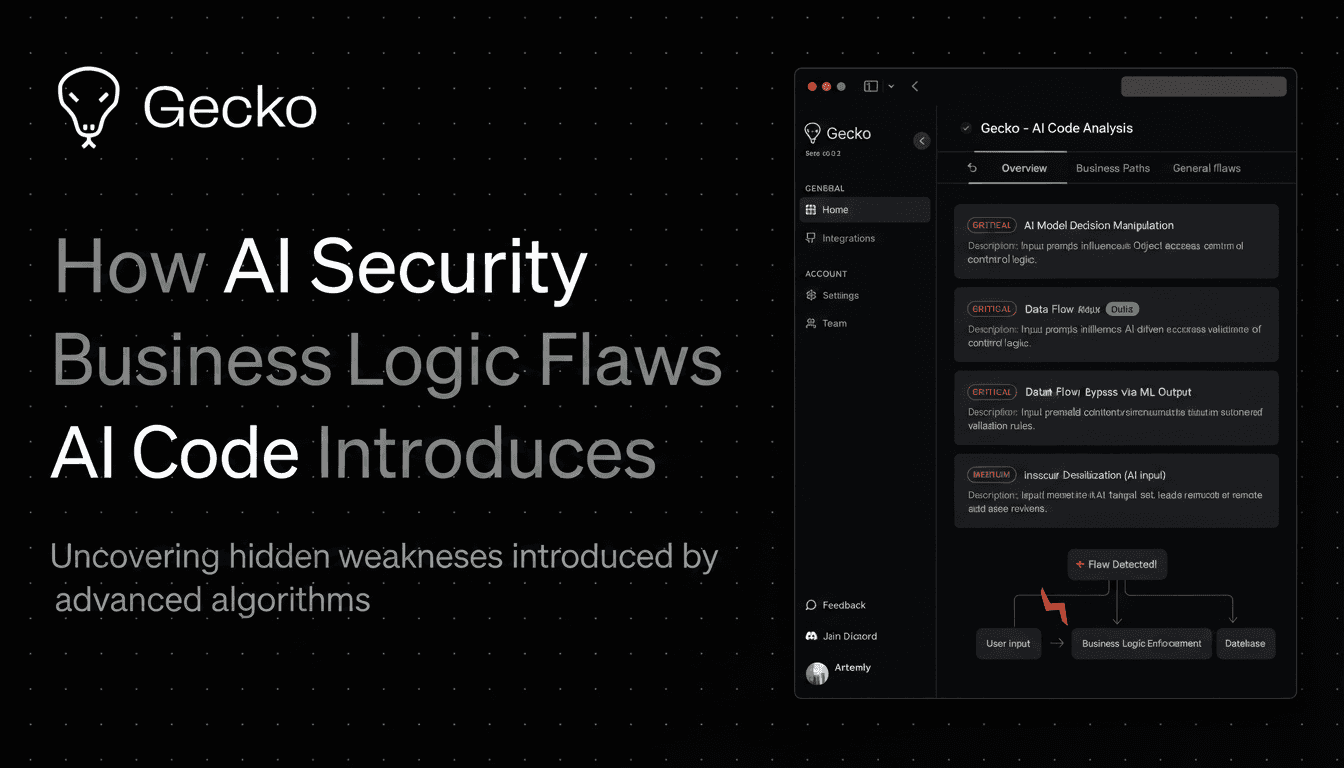
Gecko's compiler-accurate indexer builds a semantic graph across your entire codebase, tracing how data flows between services, where trust boundaries exist, and whether authorization logic actually gets enforced at each layer. When Claude Code generates a new endpoint that skips an ownership check, or wires up a service-to-service call without propagating user context, Gecko sees it, because the analysis reasons about what the code is supposed to do, beyond what it says.
That's the gap worth closing. AI writes code fast. Gecko checks whether that code holds up under the attack scenarios that matter.
The sandboxing helps, but the real risk isn't file deletion. Claude Code's output skips authorization checks and exposes sensitive data through broken business logic, and that's where attackers operate.
Understanding Claude Code security means understanding that speed and correctness don't come bundled together. Enterprises spend 17 times more on AI-powered security tools than on securing the AI systems themselves, according to Gartner's 2026 analysis, pointing to a critical investment gap in protecting the very tools organizations rely on to ship code faster.
Gecko finds the authorization bypasses and privilege escalation paths that AI-generated code introduces, analyzing your entire codebase semantically to catch what pattern-matching tools miss. Book a 30-minute session if you want to see what vulnerabilities are hiding in your AI-written code.
Not without hitting sandbox restrictions first. Claude Code's kernel-enforced isolation (Seatbelt on macOS, bubblewrap on Linux) blocks filesystem access and network calls outside your explicitly permitted scope, even if prompt injection tricks the model into attempting exfiltration or malicious execution.
MCP servers run as trusted processes with no automatic vetting or sandboxing. 48% use insecure credential storage and 53% rely on long-lived static tokens, which means a compromised server installed from an untrusted source gets the same access as any binary you run, including your AWS keys or database credentials.
Restrict tool permissions using the /permissions command to whitelist only necessary bash commands and file paths, audit any third-party content Claude Code reads (READMEs, dependency docs, API responses), and avoid giving write access to sensitive directories without human confirmation for each operation.
AI tools produce 2.74x more vulnerabilities than human-written code, with 45% of AI-generated code containing security flaws. The most common issues are SQL injection, hardcoded credentials, and missing authorization checks: the same vulnerability classes that lead security lists, now reintroduced at scale.
Gecko finds the business logic flaws AI code introduces that pattern-based SAST tools miss: authorization bypasses where new endpoints skip ownership checks, privilege escalation chains across service boundaries, and missing permission validation when Claude Code wires up service-to-service calls without propagating user context.
Gecko Security
The latest news, technologies, and resources from our team.
How Cal.com consolidated noisy security tooling into one continuous, context-aware pull request security program with Gecko.
Gecko Security
See what actually changed in the OWASP Top 10 for 2026, from merged SSRF and XXE categories to new supply chain risks and scanner coverage gaps.

Jeevan Jutla
Gecko Security uncovered CVE-2026-21894 in August 2026, an n8n authorization bypass with CVSS 8.8. See why static tools missed it and how to remediate it.
Jeevan Jutla
Security misconfiguration is OWASP A05 for a reason. Learn how deployment context determines exploitability and how to fix gaps in August 2026.
Jeevan Jutla
How do modern AppSec vendors actually compare? This July 2026 capability map covers SAST, DAST, SCA, business logic flaws, and cross-service
Gecko Security
Break down your AppSec stack: what SAST, DAST, SCA, IAST, and pen testing each see — and what they miss. Updated July 2026 by Gecko Security.
Gecko Security
Occasional updates, new content, and insights. No spam; unsubscribe anytime.




