
Company
How Cal.com Rebuilt AppSec After Going Closed Source
How Cal.com consolidated noisy security tooling into one continuous, context-aware pull request security program with Gecko.
Gecko Security
 Gecko Security9 min read
You're looking at Gecko Security vs Semgrep because your current SAST setup catches the obvious stuff but misses everything that matters in production. Semgrep will find your SQL injection and your leaked API keys, which is useful but not where the real risk lives. The vulnerabilities causing breaches right now are broken access control, IDOR, and business logic flaws that look completely normal to a pattern matcher because no dangerous function gets called and no syntax rule gets violated. Those require semantic reasoning across your entire codebase, which is a different problem than matching code shapes against a rule library.
TLDR:
Semgrep is an open-source static analysis tool built around pattern matching and AST analysis. Security and engineering teams write rules describing code patterns, and when code matches one of those patterns, Semgrep flags it as a finding. This approach is fast to set up, especially for teams that already know which vulnerability patterns they want to catch.
The free Community Edition handles single-file analysis, scanning against a large registry of community and official rules. Need more depth? The paid tier adds cross-file dataflow analysis and an AI Assistant for triage and remediation guidance. Semgrep supports a wide range of languages, including Python, JavaScript, Go, Java, and Ruby.
Both tiers share the same underlying model: write a rule, match it against syntax, surface what fits, and let your team sort through the results. The strength here is speed and configurability. If a known vulnerability has a recognizable syntactic shape, Semgrep will catch it reliably.
The limitation is that this model struggles with vulnerabilities that span multiple files, involve indirect data flow, or require understanding of application-level behavior. Pattern matching tells you what code looks like, not what it does.
Gecko Security is an AI-powered code security tool built for the way vulnerabilities actually exist in real codebases: spread across files, hidden in call chains, and embedded in business logic that no pattern-matching rule can anticipate. Where traditional SAST tools scan files in isolation, Gecko reasons across your entire repository. It builds a semantic index of your codebase, tracking how data flows between functions, modules, and services to catch vulnerabilities that only become visible when you trace the full execution path.
The core finding engine is agentic. Instead of running a fixed ruleset, Gecko's AI agents investigate code the way a skilled security engineer would: following a suspicious function call through layers of abstraction, checking whether sanitization actually happens upstream, and assessing whether the logic itself is sound.
Where traditional SAST tools scan files in isolation, Gecko reasons across your entire repository. It builds a semantic index of your codebase, tracking how data flows between functions, modules, and services to catch vulnerabilities that only become visible when you trace the full execution path.
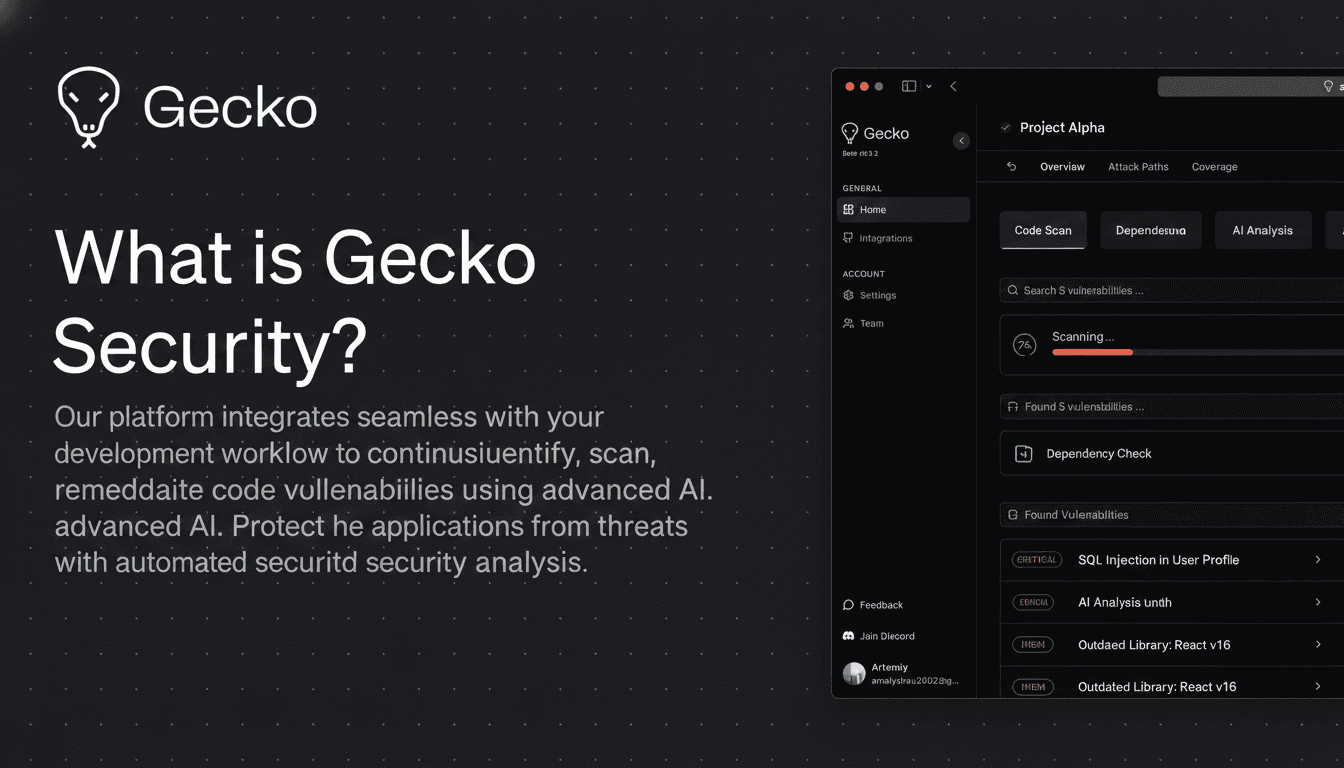
The core finding engine is agentic. Instead of running a fixed ruleset, Gecko's AI agents investigate code the way a skilled security engineer would: following a suspicious function call through layers of abstraction, checking whether sanitization actually happens upstream, and assessing whether the logic itself is sound.
This matters most for the vulnerabilities that cause real damage:
Gecko integrates directly into CI/CD pipelines and surfaces findings with enough context that developers can act on them without needing a security team to triage first.
The technical difference between these two tools starts at the foundation.
Semgrep combines AST parsing and regex to match patterns against code syntax. In the Community Edition, that analysis stays within a single file or function. The paid tier extends this with cross-file dataflow tracking for select enterprise languages, which helps with some taint-based scenarios but doesn't change the underlying model.
Gecko builds a Code Property Graph using LSIF indexing, a compiler-accurate semantic model that preserves symbol positions, type information, and reference relationships across files, repositories, and services. Where an AST maps syntax within a file, Gecko's graph maps relationships across your entire system. It combines language-specific tools to parse and type-check code, recording exactly how symbols connect with the same depth an IDE uses to understand code semantically.
That difference becomes clear when you need to ask: "Is there an authorization check anywhere in this execution path?"
AST-based analysis cannot answer that question. It sees syntax within scope, not behavior across boundaries. Gecko traces call chains across service boundaries and reasons about whether logic holds end-to-end, which is exactly what inter-procedural vulnerability detection requires.
| Capability | Semgrep | Gecko Security |
|---|---|---|
| Analysis Method | AST parsing and regex pattern matching against code syntax. Community Edition analyzes single files; paid tier adds cross-file dataflow for select languages. | Code Property Graph using LSIF indexing that maps semantic relationships across entire codebase, tracking symbol positions, type information, and call chains across files and services. |
| Vulnerability Detection Strength | Catches vulnerabilities with recognizable syntactic patterns: SQL injection, XSS, hardcoded secrets, unsafe cryptographic functions. Achieved 1.9x better recall on IDOR detection compared to standalone AI coding assistants in alpha testing. | Detects business logic flaws and authorization vulnerabilities that span multiple files: broken access control, IDOR, authentication bypass, privilege escalation. Reasons about correctness across execution paths. |
| Cross-File Analysis | Limited to single-file analysis in Community Edition. Paid tier offers cross-file dataflow tracking for enterprise languages, useful for some taint-based scenarios. | Full cross-repository semantic analysis traces data flow and trust boundaries across services, modules, and microservice architectures by default. |
| AI Integration | AI Assistant layer added post-analysis for triage help and remediation suggestions. Explains findings and generates fix recommendations after pattern matching completes. | AI built into the core analysis engine. LLMs reason about exploitability during scanning to score findings and reduce false positives by 50% before results surface. |
| Best For | Teams with mature rule libraries catching known vulnerability patterns, compliance checks, and syntactic code quality issues in CI/CD pipelines. | Teams running microservices or cloud-native architectures needing to catch authorization bugs, business logic flaws, and multi-step vulnerabilities that traditional SAST misses. |
Semgrep is strongest where vulnerabilities have a clear syntactic signature. SQL injection, XSS, hardcoded secrets, and misused cryptographic functions all map cleanly to patterns, and Semgrep's rule registry covers these well.
But pattern matching doesn't reach the vulnerability class that matters most right now. The OWASP Top 10 (2021–2025) found that 100% of roughly 500,000 applications tested had some form of broken access control, making it the #1 vulnerability category for four consecutive years. These bugs don't have a recognizable code pattern. Catching them requires understanding whether the authorization logic is correct for a specific application's permission model, which goes well beyond spotting suspicious functions in isolation.
That's where Gecko operates. Broken access control, IDOR, authentication bypass, and privilege escalation are all questions about correctness. Gecko's semantic reasoning traces how trust and data flow across the full system, then asks whether the logic holds. Where Semgrep catches what code looks like, Gecko asks whether what the code does is actually secure.
Semgrep added AI features to its product, but the integration is limited to post-analysis work: explaining findings in plain language and suggesting remediation steps. AI plays no role during the actual scan — it doesn't reason about whether a flagged pattern is exploitable, assess context, or reduce noise before results surface.
Gecko Security takes a different approach. AI is built into the analysis engine itself, not bolted on as a post-processing layer. When Gecko scans your codebase, it uses LLMs to reason about whether a finding represents a real vulnerability in context, cutting through the noise before results ever surface.
The practical difference shows up in false positive rates. Security teams routinely report spending a significant portion of their time chasing false positives from traditional SAST tools. Gecko's AI triage cuts that burden by 50% by scoring findings against actual exploitability instead of pattern proximity alone.
There are a few specific ways this plays out:
Semgrep's AI layer is genuinely useful for developers unfamiliar with a vulnerability class. But for teams trying to reduce triage time at scale, the difference in where AI sits in the pipeline matters considerably.
Semgrep earns its place in security stacks built around known vulnerability patterns. For teams scanning for injection flaws, hardcoded secrets, and standard compliance checks with an existing rule library, it's a capable and fast option. Organizations with mature CI/CD pipelines and deep Semgrep rule libraries have real reasons to keep it.
But if your threat model includes what actually causes breaches today, the answer changes. Business logic vulnerabilities appear functionally normal (no dangerous function is called, no syntax is broken) which is exactly why rules-based scanning misses them. Catching them requires understanding what the code is supposed to do, then checking whether it actually does it. That's a gap Semgrep cannot close by design.
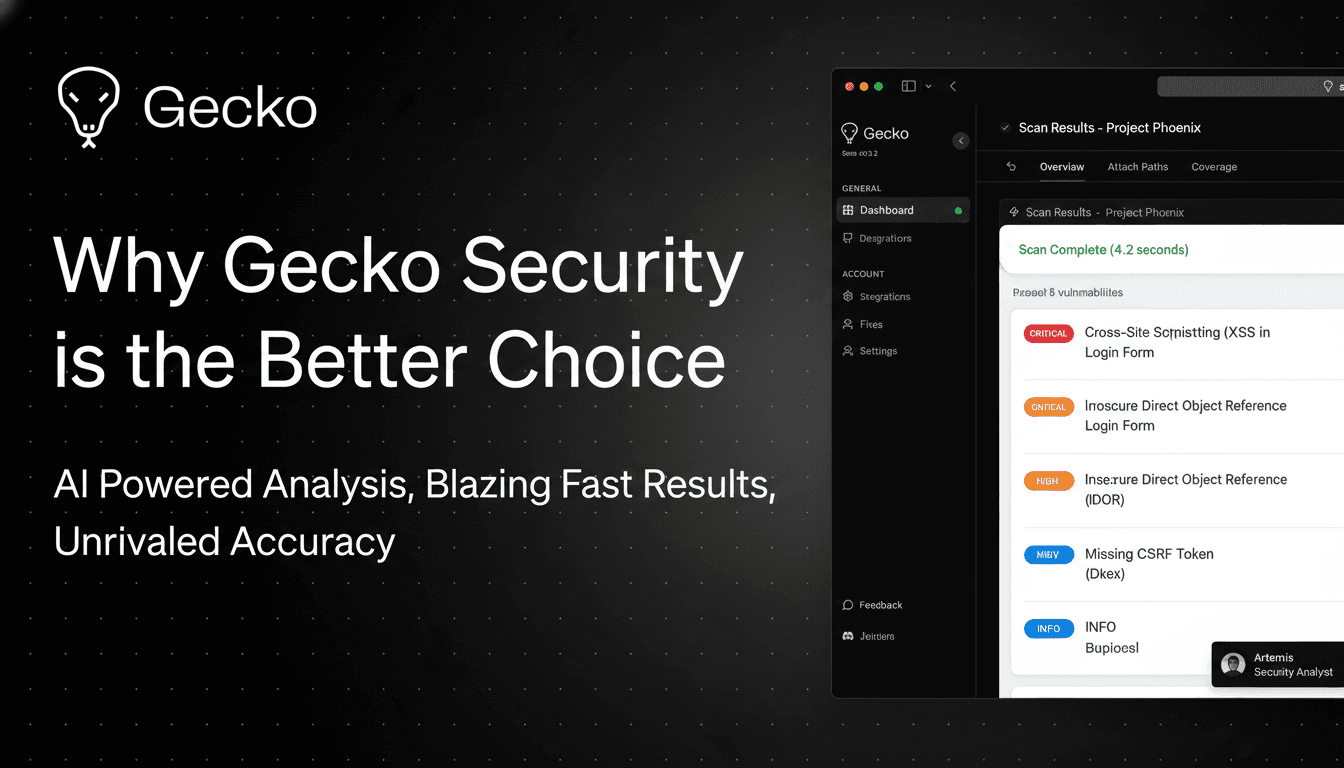
That's the gap Gecko was built to fill. For teams running microservice architectures, polyglot codebases, or cloud-native applications where trust boundaries span multiple services, cross-repository semantic analysis isn't optional. Gecko replaces weeks of manual penetration testing with automated detection of broken access control, IDOR, and authorization bypass at the speed your pipeline demands.
If Semgrep is your linter for known patterns, Gecko is your security engineer for everything else.
Choosing between code security tools starts with knowing which vulnerability classes actually threaten your application. Rules-based scanning has clear value for injection flaws and hardcoded secrets, but it can't answer questions about whether your access control logic is correct. You need semantic analysis that reasons across files, services, and trust boundaries the same way a security engineer would during a manual review. Talk to us about how agentic AI finds the authorization bugs and business logic flaws hiding in your call chains.
Your decision hinges on what vulnerability types matter most to your team. If you're primarily catching known patterns like SQL injection, hardcoded secrets, and compliance violations against a mature rule library, Semgrep's pattern-matching excels at that. If you're running microservices or need to catch broken access control, IDOR, and business logic flaws that span multiple files and services, Gecko's semantic analysis is purpose-built for those cases.
Semgrep uses AST parsing and regex to match syntactic patterns within files (or across files in the paid tier for select languages), which works well for vulnerabilities with recognizable code shapes. Gecko builds a compiler-accurate Code Property Graph that traces relationships across your entire system, allowing it to reason about whether authorization logic is actually correct, beyond whether certain functions appear in the code.
Teams running cloud-native architectures with microservices, polyglot codebases, or complex trust boundaries get the most value from Gecko's cross-repository semantic analysis. Security teams spending more than 25% of their time triaging false positives from traditional SAST tools will see immediate time savings, and organizations where business logic vulnerabilities have slipped past existing tools should adopt Gecko's reasoning-based detection.
You can run both. Many teams use Semgrep for fast compliance checks and known pattern detection while adding Gecko for business logic vulnerability discovery and cross-service analysis. If you have mature Semgrep rule libraries already tuned to your codebase, keeping those for syntactic checks while using Gecko for semantic vulnerabilities gives you coverage across both threat classes without duplicating effort.
Gecko Security
The latest news, technologies, and resources from our team.
How Cal.com consolidated noisy security tooling into one continuous, context-aware pull request security program with Gecko.
Gecko Security
See what actually changed in the OWASP Top 10 for 2026, from merged SSRF and XXE categories to new supply chain risks and scanner coverage gaps.

Jeevan Jutla
Gecko Security uncovered CVE-2026-21894 in August 2026, an n8n authorization bypass with CVSS 8.8. See why static tools missed it and how to remediate it.
Jeevan Jutla
Security misconfiguration is OWASP A05 for a reason. Learn how deployment context determines exploitability and how to fix gaps in August 2026.
Jeevan Jutla
How do modern AppSec vendors actually compare? This July 2026 capability map covers SAST, DAST, SCA, business logic flaws, and cross-service
Gecko Security
Break down your AppSec stack: what SAST, DAST, SCA, IAST, and pen testing each see — and what they miss. Updated July 2026 by Gecko Security.
Gecko Security
Occasional updates, new content, and insights. No spam; unsubscribe anytime.




