
Company
How Cal.com Rebuilt AppSec After Going Closed Source
How Cal.com consolidated noisy security tooling into one continuous, context-aware pull request security program with Gecko.
Gecko Security
Gecko Security8 min readIf you're looking at security tools for enterprise appsec, you'll notice that most vulnerability scanners treat each repository like an island. That works fine until you're running microservices and the most critical bugs live in the gaps between services. AISLE and Gecko both use AI to reason about code, but the architecture understanding they bring to cross-service analysis is where the comparison actually matters.
TLDR:
AISLE™ is an AI-native cyber reasoning system designed to autonomously identify, triage, and remediate application vulnerabilities. Unlike traditional rule-based scanners, AISLE positions itself as a reasoning-driven tool capable of handling both known vulnerability classes and zero-day findings.
The core value proposition revolves around automation across the full remediation lifecycle. AISLE scans for vulnerabilities, verifies findings, and applies patches without requiring manual intervention at each step. That end-to-end automation angle is where it draws the most attention from enterprise security teams looking to reduce hands-on workload.
Where AISLE gets interesting is the verification layer. Instead of surfacing a finding and leaving remediation to developers, the system claims to confirm that its patches actually resolve the issue before closing out the ticket. Whether that verification holds up across complex, distributed architectures is a fair question, and one we'll get into when we compare it directly against how Gecko approaches the same problem.
Gecko Security is an AI-native application security tool built to find what traditional SAST tools consistently miss: business logic flaws, broken authentication, and multi-step vulnerability chains. Where rule-based scanners match patterns, Gecko reasons about intent.
The core difference is semantic understanding. Where traditional tools parse syntax file-by-file, Gecko builds a Code Property Graph that preserves relationships across the entire codebase, pulling in infrastructure context from tools like Wiz and design documentation along the way. That means tracing how data flows across service boundaries, identifying where authorization checks are absent, and detecting when a sequence of individually benign actions chains into a critical exploit.
Here's what that looks like in practice:
Gecko has found 30+ CVEs across major open-source projects in under eight months, including complex account takeover chains at Cal.com. That track record shows semantic reasoning capabilities when built correctly from the ground up.
Both tools share a similar detection philosophy: use AI to validate and exploit findings before surfacing results. That shared foundation matters, but the differences in execution are where the comparison gets meaningful.
AISLE covers a broad vulnerability class range, including race conditions, missing authentication, and business logic flaws. Its exploit generation is built to confirm findings automatically, which cuts down on noise from unverified alerts.
Gecko's detection goes further on the semantic side. Because Gecko builds a full Code Property Graph before any analysis starts, the AI reasons against an accurate model of how code actually connects across files, services, and infrastructure, not an approximation. That's what lets Gecko catch multi-step vulnerability chains that only exist when you trace execution across service boundaries.
Both tools produce PoC exploits to validate findings. The distinction is what feeds the reasoning engine. AISLE generates exploits from its own analysis pass. Gecko generates them from a compiler-accurate semantic graph, which means the underlying data the AI works from is structurally closer to ground truth.
AISLE delivers ready-to-merge patches and pull requests, keeping a human reviewer in the approval loop before anything ships. That model works well for teams that want automated remediation suggestions without fully committing to automated deployment.
Gecko takes a different path by embedding directly into the development workflow. Through GitHub PR integration, Gecko comments on pull requests with detailed vulnerability descriptions, tracks which issues are introduced or resolved at the commit level, and blocks merges until findings are cleared. Remediation happens at the source, before code reaches production.
The core distinction is timing. AISLE surfaces vulnerabilities and proposes fixes after the fact. Gecko catches issues during the PR review process, so the fix loop starts before the code ever merges. For teams already working in GitHub, that means less context-switching, faster resolution, and security that lives inside the workflow instead of running alongside it as a separate audit step.
| Feature | Gecko Security | AISLE™ |
|---|---|---|
| Core Detection Approach | Compiler-accurate semantic graph with Code Property Graph that preserves relationships across entire codebase, tracing data flow across service boundaries | AI-native cyber reasoning system using automated exploit generation to verify findings across broad vulnerability class range |
| Architecture Understanding | Parses API contracts directly including OpenAPI specs, protobuf schemas, AsyncAPI definitions, and route decorators to map exact request paths between services | Maintains dependency graph analysis as living blueprint of enterprise software stacks showing how components relate over time |
| Cross-Service Analysis | Traces authorization logic through full call chains across multiple microservices, catching vulnerabilities that span service boundaries | Handles scale through dependency mapping at component level, tracking relationships between services |
| Remediation Workflow | Embeds directly into GitHub PR integration, commenting on pull requests with vulnerability details and blocking merges until findings are cleared | Delivers ready-to-merge patches and pull requests with human reviewer approval before deployment |
| Vulnerability Focus | Specializes in business logic flaws, broken access control, and multi-step vulnerability chains that traditional SAST tools miss | Covers race conditions, missing authentication, business logic flaws, and zero-day findings with automated verification |
| Timing in Development Cycle | Catches issues during PR review process before code merges to production, embedding security into development workflow | Surfaces vulnerabilities and proposes fixes after scanning, maintaining separate approval workflow |
Most vulnerability scanners treat each repository as an island. That's fine for simple apps, but in a microservice environment, the most dangerous bugs often live in the gaps between services.
AISLE handles scale through dependency graph analysis, maintaining what it describes as a living blueprint of enterprise software stacks. It can ingest repositories of arbitrary size, which matters when your organization runs dozens of services with thousands of interdependencies. The model keeps an updated picture of how components relate to each other over time.
Gecko takes a more structural approach to the same problem. Where AISLE maps dependencies at a high level, Gecko parses API contracts directly: OpenAPI specs, protobuf schemas, AsyncAPI definitions, and route decorators. It maps HTTP clients to REST endpoints, links message publishers to subscribers, and connects gRPC clients to their service definitions. That lets Gecko extend its semantic graph across service boundaries and trace a call chain from one service into the handler living inside another.
The difference is in specificity. AISLE knows your services are connected. Gecko knows the exact path a request takes through them, which is what you need when you're tracing an authorization flaw across three service layers.
Broken access control holds the #1 spot on the OWASP Top 10 and affects 100% of tested applications. At that scale, the question stops being about how many issue types a tool covers and starts being about whether the tool actually finds the bugs that matter most.
AISLE does automated remediation workflows well. If your team needs broad coverage with fix suggestions baked in, it delivers on that promise.
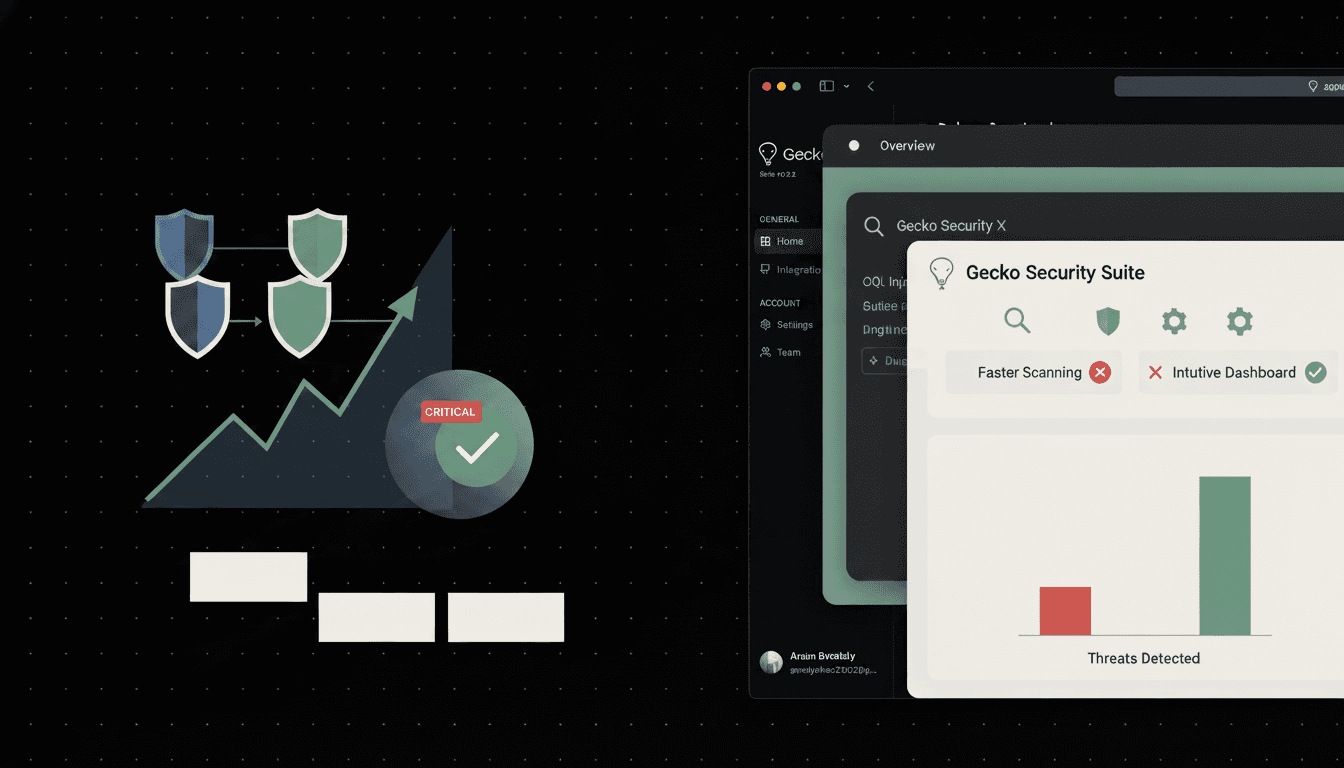
But Gecko was built for a different problem. Its compiler-accurate semantic graph reasons about authorization intent across service boundaries, extending well beyond individual files or functions. When a broken access control vulnerability lives across three microservices and no single file contains enough context to spot it, that cross-boundary reasoning is what separates a finding from a miss.
If business logic vulnerabilities represent your real exposure, Gecko is the more precise instrument for finding them.
If you're comparing enterprise appsec options, start with your actual exposure. AISLE delivers solid remediation automation for well-scoped vulnerabilities, but business logic flaws across microservices need deeper semantic reasoning before any fix makes sense. Gecko's cross-service analysis catches the authorization bugs that traditional scanners miss because they trace execution paths through your full architecture. Set up a 30-minute call to walk through detection on your specific stack.
Start with your primary security pain point. If you're struggling with business logic vulnerabilities that span multiple services (broken access control, authorization bypass, multi-step exploit chains), Gecko's compiler-accurate semantic graph gives you the depth you need. If your priority is accelerating remediation workflows with automated patch generation across a broad vulnerability class range, AISLE's approach fits that use case better.
Both use AI reasoning and generate proof-of-concept exploits, but they reason against different underlying models. AISLE analyzes code and generates exploits from that analysis pass. Gecko builds a Code Property Graph first: parsing API contracts, mapping service-to-service calls, and preserving semantic relationships, then reasoning against that compiler-accurate model. That structural difference is why Gecko catches authorization flaws that only exist when you trace execution across three microservices.
Gecko handles microservice environments through direct API contract parsing (OpenAPI specs, protobuf schemas, gRPC definitions), which lets it trace exact request paths across service boundaries. AISLE maintains a dependency graph view of how services relate, which works for understanding your stack at scale. If your vulnerabilities hide in the gaps between services (missing authorization checks at service boundaries, context dropped between layers), Gecko's cross-service call chain analysis is the better fit.
Both tools will surface vulnerability classes your existing SAST missed entirely: business logic flaws, broken access control across services, multi-step chains. Expect your initial scan to reveal findings that were invisible to pattern-matching tools. Gecko integrates directly into GitHub PRs, so migration means embedding security into your review process instead of running separate audit cycles. AISLE surfaces findings with ready-to-merge patches, keeping remediation in a separate approval workflow.
Gecko was built for this class. Its semantic reasoning traces authorization logic through full call chains, catching cases where access checks exist in one layer but get silently bypassed in another service. AISLE covers missing authentication and business logic flaws in its detection scope, but Gecko's compiler-accurate semantic graph gives it the cross-boundary reasoning depth that broken access control vulnerabilities require when they span multiple services.
Gecko Security
The latest news, technologies, and resources from our team.
How Cal.com consolidated noisy security tooling into one continuous, context-aware pull request security program with Gecko.
Gecko Security
See what actually changed in the OWASP Top 10 for 2026, from merged SSRF and XXE categories to new supply chain risks and scanner coverage gaps.

Jeevan Jutla
Gecko Security uncovered CVE-2026-21894 in August 2026, an n8n authorization bypass with CVSS 8.8. See why static tools missed it and how to remediate it.
Jeevan Jutla
Security misconfiguration is OWASP A05 for a reason. Learn how deployment context determines exploitability and how to fix gaps in August 2026.
Jeevan Jutla
How do modern AppSec vendors actually compare? This July 2026 capability map covers SAST, DAST, SCA, business logic flaws, and cross-service
Gecko Security
Break down your AppSec stack: what SAST, DAST, SCA, IAST, and pen testing each see — and what they miss. Updated July 2026 by Gecko Security.
Gecko Security
Occasional updates, new content, and insights. No spam; unsubscribe anytime.




