What Is Static Code Analysis? A Complete Guide for May 2026
 Artemiy Malyshau13 minute read
Learn what static code analysis is, how it works, and its limitations in catching vulnerabilities. Complete guide updated for May 2026.
If you're running static code analysis in your CI pipeline, the tradeoff is familiar: catch known vulnerability patterns early, but drown in false positives and miss everything that requires understanding what the code should do instead of just what it does. AST-based tools read one file at a time, which means cross-service authorization checks, multi-step exploit chains, and semantic flaws that live in the relationships between components all slip through. The syntax is perfect, the code compiles and runs, but the security model is broken in ways no ruleset can detect.
TLDR:
- Static analysis scans code without running it to catch bugs early, but 76% of alerts are false positives
- Traditional SAST tools miss business logic flaws like broken access control (now #1 in OWASP, affecting 100% of apps)
- AI-generated code carries security vulnerabilities in 45% of cases, worsening the gap pattern-based tools can't close
- Gecko Security uses semantic analysis to find authorization bypasses and logic flaws traditional SAST misses
What Is Static Code Analysis?
Static code analysis is the process of reviewing source code for bugs, vulnerabilities, and quality issues without ever running it. Instead of waiting for runtime behavior, analysis happens directly on the code itself, catching problems before they reach production.
The "static" part is the key distinction. No execution, no test environment, no deployed app required. You hand a tool your code, it reads through the logic, and flags anything suspicious. This makes it one of the earliest possible checks you can run in a development workflow.
In practice, static analysis covers a wide range of checks:
- Security vulnerabilities like SQL injection or cross-site scripting
- Logic errors and unreachable code
- Code quality issues like unused variables or improper error handling
- Dependency and configuration risks
The appeal is speed. Developers get feedback during or right after writing code, long before a security team ever reviews it. Catching a bug at commit time costs a fraction of what it costs to fix post-deployment. Static analysis is sometimes called SAST (Static Application Security Testing) in security contexts, though the two terms are often used interchangeably.
Static Code Analysis vs Runtime Code Analysis
Static analysis reads code without running it. Runtime analysis does the opposite: it watches your application behave at runtime, catching issues that only surface when the app is actually executing.
Each catches different things. Static analysis excels at spotting misconfigured logic, hardcoded secrets, and injection patterns early. Runtime analysis catches runtime errors, memory leaks, and certain behavioral vulnerabilities that require live execution to reveal.
Factor | Static Analysis | Runtime Analysis |
|---|---|---|
When it runs | Before execution | During execution |
Speed | Fast | Slower |
False positives | Higher | Lower |
Finds logic flaws | Limited | Better, but not complete |
Requires running code | No | Yes |
Runtime tools like fuzzers and DAST scanners can confirm a vulnerability is actually exploitable, but they only test what they can reach. Deep code paths, rare conditions, and business logic flaws often go untested. Static tools cover more surface area but flag things that aren't actually reachable.
Neither approach wins outright. Most serious security programs use both.
How Static Code Analysis Works
Most static analysis tools follow a similar sequence under the hood. First, they parse your source code into an abstract representation, typically an Abstract Syntax Tree (AST). Think of the AST as a structured map of your code's grammar: functions, conditions, loops, and variable assignments all become nodes in a tree the tool can traverse programmatically.

From there, several analysis techniques run against that representation:
- Control flow analysis traces every possible execution path through your code, identifying unreachable branches or conditions that always resolve the same way
- Data flow analysis tracks how values move between variables and functions across a program
- Taint analysis, a specialized form of data flow analysis, marks user-supplied input as "tainted" and follows it through the codebase to see if it ever reaches a dangerous operation like a database query or shell command without sanitization
Once parsed, the tool checks findings against a ruleset. Rules encode known vulnerability patterns: if tainted data reaches eval(), flag it. If a password field uses MD5, flag it.
The limitation here is scope. AST-based tools read one file at a time. They see the tree of your code, but they can't easily answer questions that span across files or services, like whether an authorization check exists somewhere in a call chain. That's a structural constraint of how the analysis works, not a tooling failure - and it's why static analysis struggles with business logic vulnerabilities that require cross-component understanding.
Common Techniques Used in Static Code Analysis
Static tools often layer several approaches on top of each other, each targeting a different category of defect.
- Lexical analysis is the simplest form. It tokenizes raw source code to scan for known bad patterns like hardcoded credentials, banned function calls, or suspicious string literals. Fast, but shallow.
- Pattern matching matches code structures against rule libraries. Effective for well-documented vulnerability classes like XSS or SQL injection.
- Semantic analysis checks that code is logically consistent beyond syntactic validity. It catches type mismatches and improper API usage.
- Complexity analysis measures cyclomatic complexity to flag functions that are too convoluted to reason about safely.
Lexical scanning handles secrets detection. Pattern matching covers known vulnerability signatures. Semantic checks catch correctness issues. Complexity metrics flag code that's risky to maintain.
Layering these techniques still doesn't solve the cross-file, cross-service problem. Every one of them operates on what the tool can see within its current parsing scope.
Benefits of Static Code Analysis
Static analysis catches bugs where they're cheapest to fix: before the code ships. A vulnerability found at commit time takes minutes to fix. The same bug found post-deployment can take weeks of triage, patching, and incident response.
The core benefits break down cleanly:
- Early detection means fewer security reviews blocking releases
- Shift-left security puts vulnerability feedback directly in developer hands instead of only security teams
- Consistent rule enforcement across every commit instead of only during periodic audits
- Faster code review cycles when automated checks handle the repetitive pattern-matching work
The compounding effect matters too. Teams that run static analysis continuously build cleaner codebases over time, because developers learn from repeated feedback instead of finding bad habits months later in a penetration test.
Challenges and Limitations of Static Code Analysis
False positives are the defining pain point of static analysis. Research from Tencent found that over 76% of static analysis alarms are false positives, with each one taking 10 to 20 minutes of manual inspection to triage. For large codebases, that's a full-time job just reviewing noise.
Beyond volume, there are structural gaps no ruleset can fix:
- Cross-file blind spots: AST-based tools can't trace logic across service boundaries
- Business logic flaws: Missing authorization checks require knowing intended behavior beyond code structure
- Context collapse: File-by-file parsing loses relationships between components
- High tuning overhead: Reducing false positives requires constant rule maintenance
Pattern matching only catches what someone already knew to look for. Novel vulnerabilities and multi-step exploit chains don't match any rule.
Types of Vulnerabilities Detected by Static Code Analysis
Static analysis tools reliably catch a specific category of vulnerability: syntactic flaws where code structure itself is the problem.
Some clear examples:
- SQL injection and command injection, where unsanitized input reaches dangerous operations without proper escaping or parameterization
- Cross-site scripting (XSS), where unescaped output reaches the browser and can execute arbitrary scripts
- Buffer overflows in languages like C++, where array bounds go unchecked and memory safety breaks down
- Hardcoded credentials and API keys embedded directly in source code
- Insecure cryptography choices, like using MD5 for password hashing
- Null pointer dereferences and general memory mismanagement
These are pattern-matchable. A rule can say "if tainted input reaches this function without sanitization, flag it" and be right most of the time.
Semantic vulnerabilities are different. A missing authorization check has no syntactic signature. A privilege escalation spanning three microservices produces no detectable pattern in any single file. The code compiles, runs, and passes tests. The flaw lives in the gap between what the code does and what it should do.
Static tools have largely solved for the syntactic category. Injection vulnerabilities have dropped steadily as frameworks defaulted to safer patterns. Business logic flaws have not, because no rule can encode intended behavior for every application.
The Business Logic Vulnerability Gap
Business logic flaws require knowing what the code was supposed to do, and whether it actually does that.
Take a missing authorization check. No taint flows anywhere suspicious. No banned function gets called. The code is syntactically perfect. The flaw is the absence of something, and absence has no signature a rule can match - like CVE-2025-51479, where authorization bypass vulnerabilities in enterprise APIs slip through without triggering any pattern-based rules.
OWASP data tells the story clearly. Broken Access Control has ranked #1 since 2021, with 100% of tested applications showing some form of it. Injection attacks, which static tools handle well, dropped from 1st to 5th over the same period.
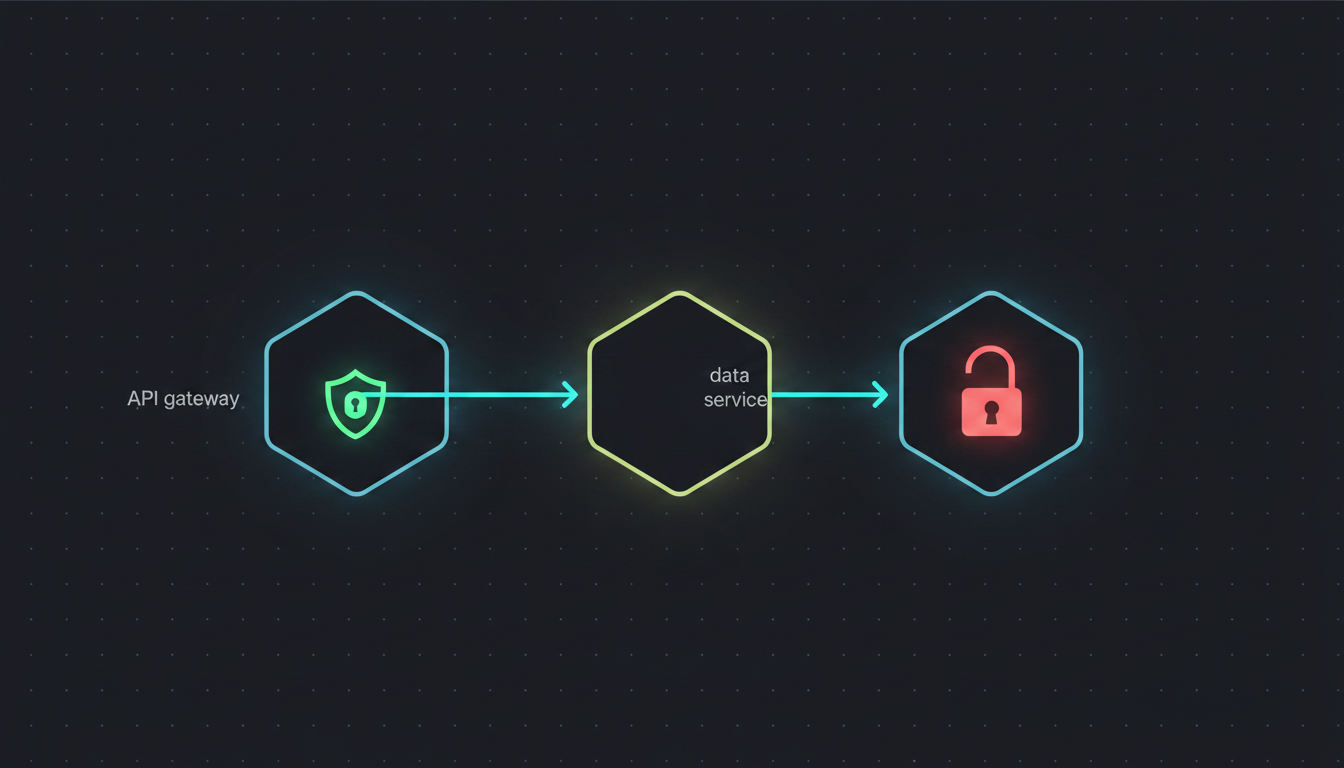
The gap is structural. An IDOR vulnerability spread across three microservices, where a user gets validated at the API gateway but not at the downstream data service, lives in the relationship between components. AST parsing never crosses that boundary.
Human pentesters have historically been the answer. A good security researcher reads code the way a developer thinks about it, building a mental model of what the system should do before probing where it doesn't.
AI-Generated Code and Security Vulnerabilities
AI coding assistants have quietly introduced a new category of risk. Across 80 coding tasks spanning four programming languages and four critical vulnerability types, only 55% of AI-generated code was secure, according to Veracode's research. Nearly half of everything written by an AI assistant carries a known flaw, such as CVE-2026-21894 and CVE-2025-53944, and even RCE in your test suite from AI agent skills that bypass traditional security scanners.
That number is getting harder to ignore. Georgia Tech researchers tracked CVEs directly attributable to AI-generated code: six in January 2026, fifteen in February, and at least thirty-five by March. The trend isn't leveling off.
The underlying problem isn't bad syntax. AI generates plausible-looking code that compiles cleanly but misses authorization checks, drops security context between functions, or skips input validation in ways that only matter at the edges. These are exactly the gaps static analysis tools already struggle to catch, and AI is producing them at scale.
Integrating Static Code Analysis Into Development Workflows
Static analysis works best when it runs where code changes happen, not as a quarterly audit. The three natural integration points are your IDE, your CI pipeline, and pull request gates.
IDE plugins (available for VS Code, IntelliJ, and others) surface findings inline as you write. CI integration runs scans on every push, blocking builds when high-severity issues appear. PR-level scanning catches problems before review, keeping security feedback in the same thread as code discussion.
A few practices that separate effective rollouts from noisy ones:
- Start with a reduced ruleset targeting only high-confidence, high-severity findings so developers aren't buried in alerts on day one
- Tune out false positives for your specific stack before expanding coverage, or teams will learn to ignore the tool entirely
- Treat security findings like failing tests: block merges instead of issuing warnings that get skipped under deadline pressure
- Set baseline thresholds so new issues get flagged without legacy debt blocking everything your team ships
The velocity concern is real but manageable. Scans that take twenty minutes break developer flow. Scans under two minutes get ignored less. Focus on speed in your initial configuration, then layer in deeper checks for scheduled nightly runs where wait time matters less.
How Gecko Security Solves Static Code Analysis Limitations
Where traditional SAST stops at syntax, Gecko starts with meaning. Instead of matching patterns against an AST, Gecko builds a Code Property Graph using compiler-accurate indexing that preserves semantic relationships across files, services, and repositories. The result is a tool that can answer questions no ruleset can: Is there an authorization check anywhere in this call chain? Does user context survive across service boundaries?
The three-phase methodology mirrors how a skilled pentester actually works. Gecko first threat-models the application's business logic, then validates each scenario as a real exploitable vulnerability, then generates proof-of-concept exploits to confirm findings before surfacing them. No guessing. No flagging code that happens to look suspicious.
That reasoning layer is what catches what traditional tools miss. AI-generated code already carries serious security risk at scale, and recent arxiv research confirms the gap between syntactic correctness and actual security keeps widening. Gecko's semantic model was built to close that gap - Gecko discovered 30 0-day vulnerabilities that no other AppSec tool found.
Final Thoughts on Shifting Security Left
Catching vulnerabilities before they ship saves weeks of incident response, but only if you're catching the right ones. Traditional static code analysis has solved for injection bugs while broken access control keeps climbing. The gap is structural, not tooling, and closing it means analyzing code the way a pentester reads it. Book time with us if you want to see what semantic security analysis catches that rulesets miss.
FAQ
Static code analysis vs runtime analysis for finding vulnerabilities?
Static analysis reads code before execution to catch bugs early, while runtime analysis tests running applications. Static tools excel at spotting injection patterns and logic errors quickly, but miss runtime-specific issues. Runtime tools confirm exploitability but only test reachable code paths. Most security programs use both: static for early detection, runtime for validation.
What's the best static code analysis tool for Python?
The answer depends on what you're trying to catch. Tools like Bandit and Pylint handle syntactic vulnerabilities and code quality issues well. For business logic flaws like authorization bypasses, you need semantic analysis that understands relationships across your codebase. Pattern matching won't catch missing permission checks or privilege escalation chains.
Can static analysis tools detect business logic vulnerabilities?
Traditional static analysis tools struggle with business logic flaws because these vulnerabilities live in the gap between what code does and what it should do. A missing authorization check has no syntactic signature to pattern-match. Catching these requires semantic understanding of your application's intended behavior across files and services; AST parsing of individual files won't cut it.
How do I reduce false positives in static code analysis?
Start with a reduced ruleset targeting only high-confidence, high-severity findings before expanding coverage. Tune out false positives specific to your stack early, or teams will learn to ignore the tool entirely. Treat security findings like failing tests: block merges instead of issuing warnings. Research shows over 76% of static analysis alarms are false positives, each taking 10 to 20 minutes to triage manually.
Why can't static analysis tools find authorization bugs across microservices?
AST-based static analysis tools parse one file at a time and can't trace logic across service boundaries. An IDOR vulnerability where user validation happens at the gateway but not at the downstream data service spans multiple components, and no single file contains the flaw. The limitation is structural: file-by-file parsing loses the relationships between services that authorization bugs exploit.